
Drawing Of Homeostasis
Drawing Of Homeostasis - If unsuccessful, disaster or death ensues. Describe thermoregulation of endothermic and ectothermic animals. Your body has set points for a variety of states—including temperature, weight, sleep, thirst,. We will discuss homeostasis in every subsequent system. Web homeostasis is an important characteristic of living things. Describe the factors affecting homeostasis. Homeostasis typically involves negative feedback loops that counteract changes of various properties from. Web maintaining homeostasis requires that the body continuously monitor its internal conditions. Web homeostasis is an almost exclusively biological term, referring to the concepts described by bernard and cannon, concerning the constancy of the internal environment in which the cells of the body live and survive. Define the following terms as they relate to homeostasis: If unsuccessful, disaster or death ensues. Identify and define the four interacting components that maintain homeostasis in feedback loops. From body temperature to blood pressure to levels of certain nutrients, each physiological condition has a particular set point. Describe thermoregulation of endothermic and ectothermic animals. The body maintains homeostasis for many factors. The adjusting of systems within a cell is called homeostatic regulation. The constant equilibrium created by homeostasis is vital to the survival of every species. The word homeostasis comes from the greek words homo, meaning “same” and stasis, meaning “steady”. Web learn about homeostasis and how the body regulates temperature, blood pressure, blood ph and blood sugar. Keeping a stable internal environment requires constant adjustments as conditions change inside and outside the cell. Exposure to extreme temperatures triggers physiological responses like shivering or sweating, ensuring a constant core temperature. The adjusting of systems within a cell is called homeostatic regulation. Web homeostasis is an important characteristic of living things. These processes take place mostly without our conscious awareness. Homeostasis typically involves negative feedback loops that counteract changes of various properties from. Compare and contrast negative and positive feedback loops. Web homeostasis sees to it that body temperature and water levels are kept within the tolerable limits at all times. The body maintains homeostasis for many factors. Identify and define the four interacting components that maintain homeostasis in feedback loops. Web maintaining homeostasis requires that the body continuously monitor its internal conditions. The receptor receives information on the changing environment, and the control centre processes the information received by the receptor. Define the following terms as they relate to homeostasis: Describe thermoregulation of endothermic and ectothermic animals. Your body has set points for a variety of states—including temperature, weight, sleep, thirst,. Exposure to extreme temperatures triggers physiological responses like shivering or sweating,. Homeostasis is regulated by negative feedback loops and, much less frequently, by positive feedback loops. In animals such as ourselves, the internal environment of our bodies must have certain conditions within tolerable limits to continue the healthy functioning of us. Web homeostasis sees to it that body temperature and water levels are kept within the tolerable limits at all times.. Homeostasis typically involves negative feedback loops that counteract changes of various properties from. Web maintaining homeostasis requires that the body continuously monitor its internal conditions. Web homeostasis sees to it that body temperature and water levels are kept within the tolerable limits at all times. Keeping a stable internal environment requires constant adjustments as conditions change inside and outside the. The receptor receives information on the changing environment, and the control centre processes the information received by the receptor. Define the setpoint and normal range for physiological measures. The body maintains homeostasis for many factors. Web choose from drawing of the homeostasis stock illustrations from istock. By the end of this section, you will be able to: Web homeostasis is the ability of an organism to maintain a stable internal environment despite changes in external conditions. From body temperature to blood pressure to levels of certain nutrients, each physiological condition has a particular set point. Homeostasis typically involves negative feedback loops that counteract changes of various properties from. From body temperature to blood pressure to levels of. Compare and contrast negative and positive feedback loops. Some of these include body temperature, blood glucose, and various ph levels. Web choose from drawing of the homeostasis stock illustrations from istock. From body temperature to blood pressure to levels of certain nutrients, each physiological condition has a particular set point. Discuss positive and negative feedback mechanisms used in homeostasis. Describe thermoregulation of endothermic and ectothermic animals. Describe the factors affecting homeostasis. Compare and contrast negative and positive feedback loops. Homeostasis is regulated by negative feedback loops and, much less frequently, by positive feedback loops. Web homeostasis is an almost exclusively biological term, referring to the concepts described by bernard and cannon, concerning the constancy of the internal environment in. Web homeostasis is the activity of cells throughout the body to maintain the physiological state within a narrow range that is compatible with life. Define the following terms as they relate to homeostasis: Web homeostasis is an important characteristic of living things. Define the setpoint and normal range for physiological measures. Web homeostasis refers to an organism's ability to regulate. Web maintaining homeostasis requires that the body continuously monitor its internal conditions. Homeostasis also extends to regulating blood pressure and sugar levels. Identify and define the four interacting components that maintain homeostasis in feedback loops. Web homeostasis, or maintaining a steady body temperature, is achieved through feedback mechanisms. The adjusting of systems within a cell is called homeostatic regulation. These processes take place mostly without our conscious awareness. From body temperature to blood pressure to levels of certain nutrients, each physiological condition has a particular set point. Web learn about homeostasis and how the body regulates temperature, blood pressure, blood ph and blood sugar. Web homeostasis refers to an organism's ability to regulate various physiological processes to keep internal states steady and balanced. Web homeostasis is the activity of cells throughout the body to maintain the physiological state within a narrow range that is compatible with life. Some of these include body temperature, blood glucose, and various ph levels. Web maintaining homeostasis requires that the body continuously monitor its internal conditions. Compare and contrast negative and positive feedback loops. Web choose from drawing of the homeostasis stock illustrations from istock. The word homeostasis derives from greek, with home meaning “similar,” and stasis, meaning “stable.” when used as an adjective, it. Web homeostasis is the tendency to resist change in order to maintain a stable, relatively constant internal environment.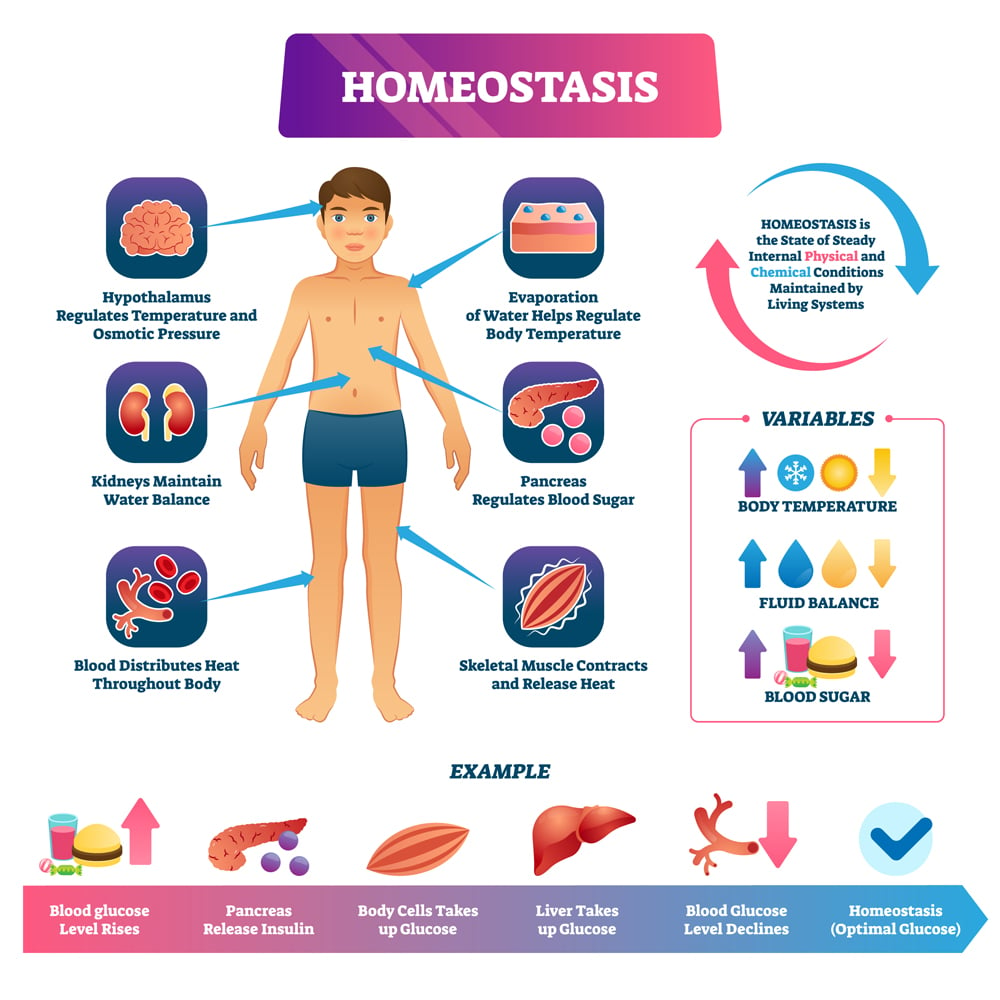
What Is Homeostasis? » ScienceABC
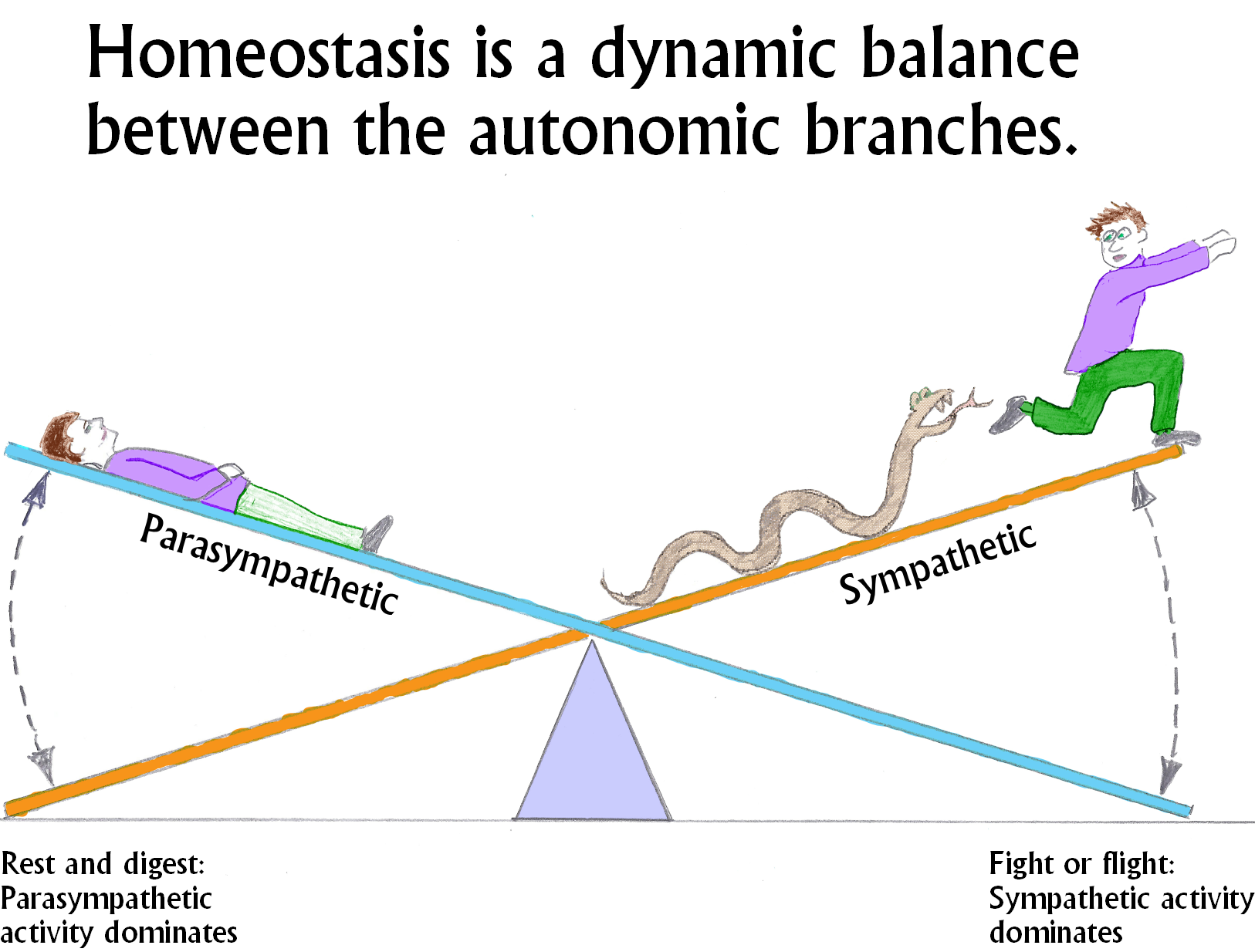
EASY PHYSIOLOGY HOW THE BODY WORK
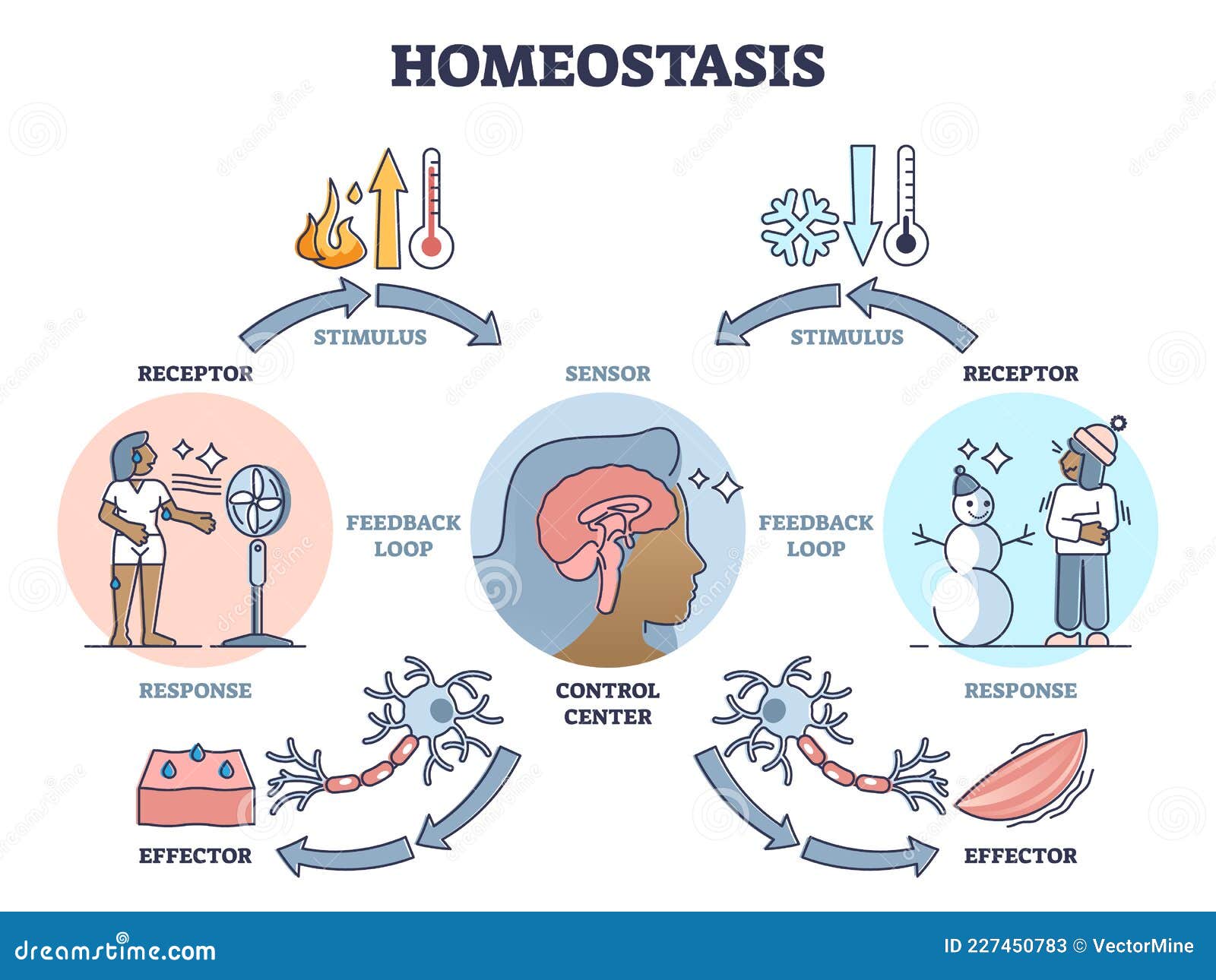
Homeostasis As Biological State with Temperature Regulation Outline
![[Life Process Class 10] Why is Homeostasis important? Biology](https://d77da31580fbc8944c00-52b01ccbcfe56047120eec75d9cb2cbd.ssl.cf6.rackcdn.com/e8414069-a51e-419b-a17c-de6cb8aeabb1/homeostasis----teachoo.jpg)
[Life Process Class 10] Why is Homeostasis important? Biology
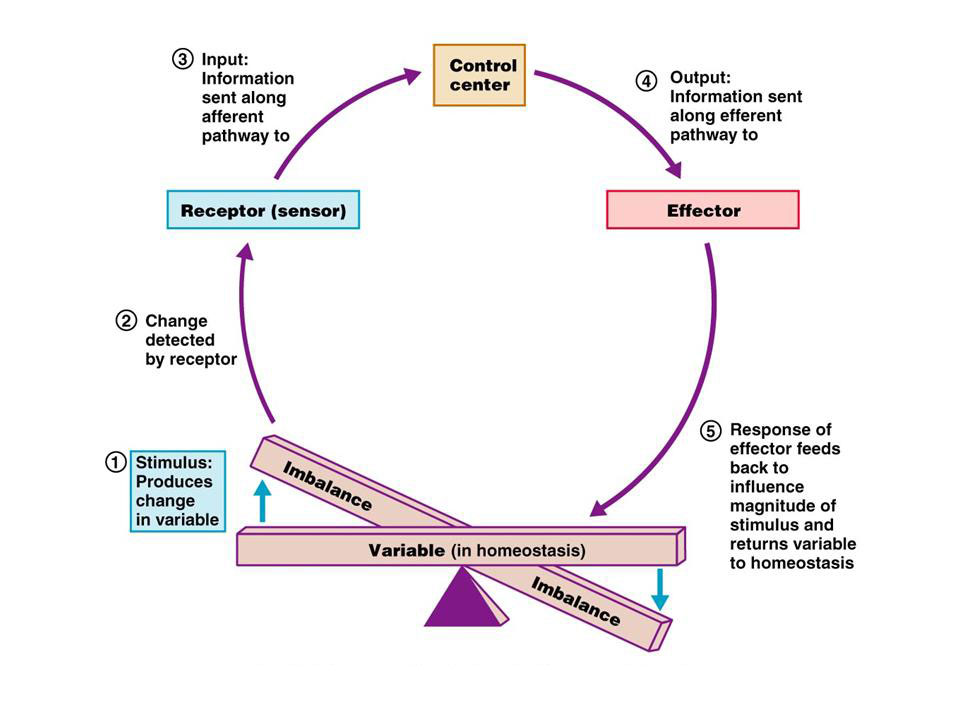
Homeostasis positive/ negative feedback mechanisms Anatomy & Physiology
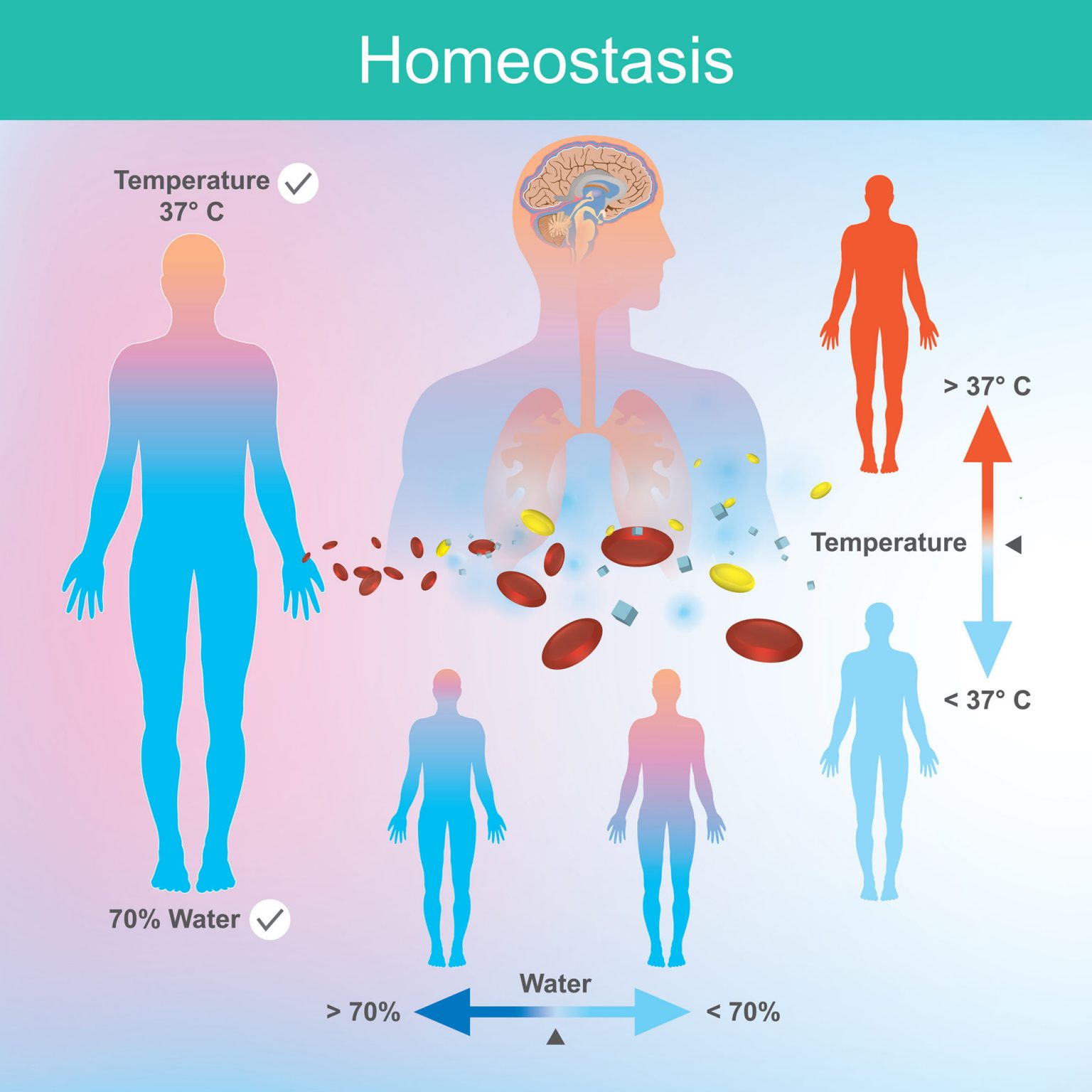
Physiological Homeostasis Biology Online Tutorial
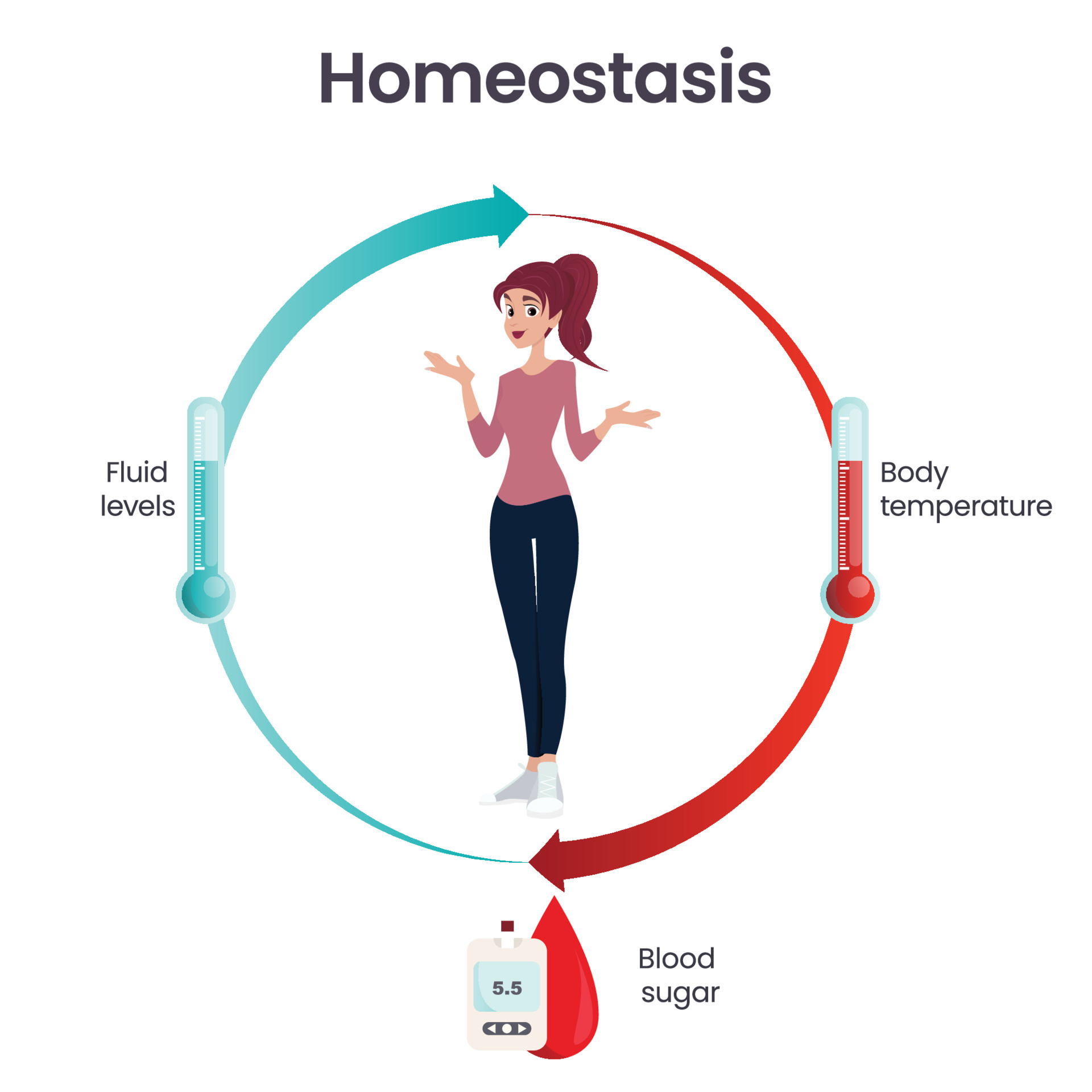
Biology homeostasis science vector illustration infographic 20561283

Homeostasis Definition, Importance & Examples Lesson

Maintaining homeostasis and listening to your body
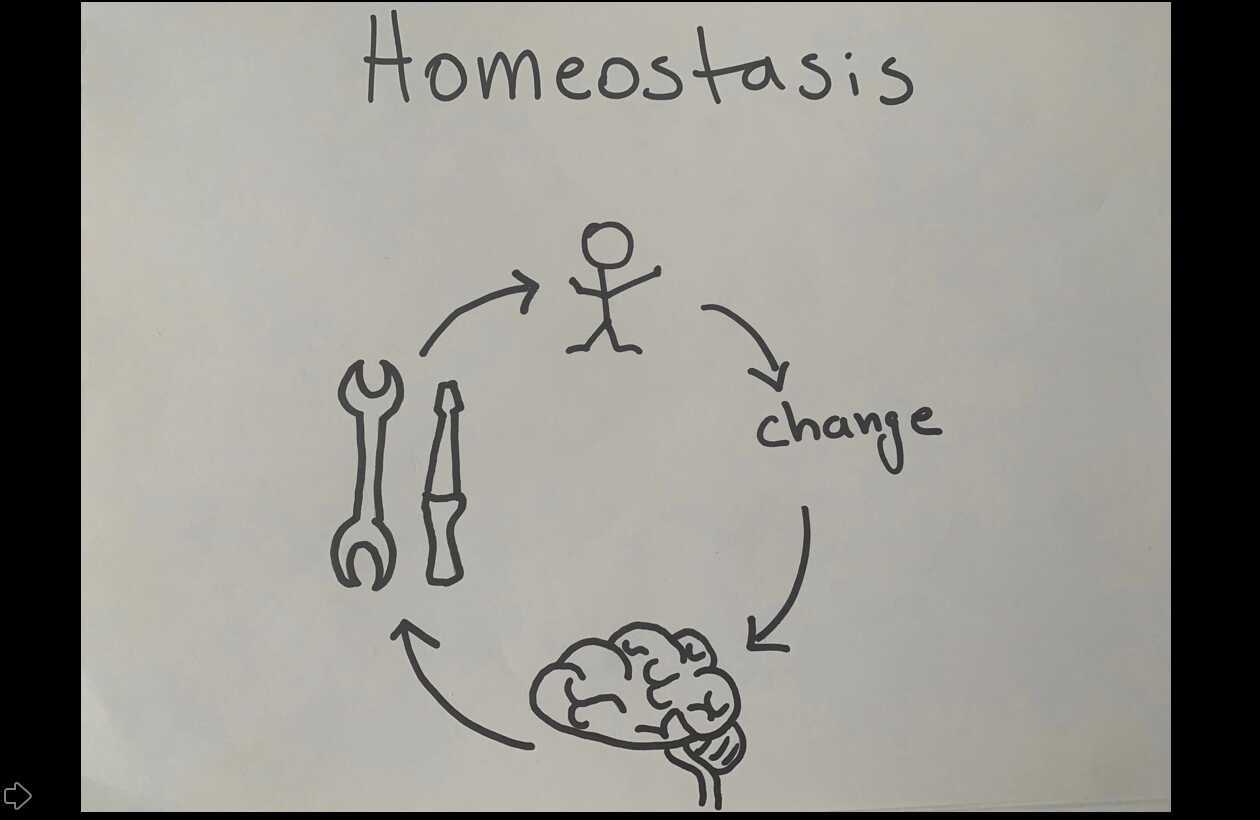
Homeostasis
By The End Of This Section, You Will Be Able To:
Define The Following Terms As They Relate To Homeostasis:
Exposure To Extreme Temperatures Triggers Physiological Responses Like Shivering Or Sweating, Ensuring A Constant Core Temperature.
Your Body Needs To Maintain Proper Homeostasis.
Related Post: